I spent some time deliberating over whether there should be an “e” — Zeroes or Zeros? According to various sources including Google NGram, the no-E version is more common in both UK and US English. The OED says the with-E version is correct; AP style says no-E is correct, and M-W says both are fine. To me, the no-E version looks odd, and I took a poll of family members (including my once-a-copy-editor spouse) and they said the same thing. So you get an E.
I spent a lot more time mastering this album than considering spelling, though. I’m quite happy with the results, but in a couple of cases I had to fight for them.
I’m 95% certain that my next project will be re-releasing older work. Probably as two volumes: one with some of my pre-Starthief, software-only material and one with the best of my early modular “churn and learn” recordings.
But I already have an idea for the next batch of new material. I’m calling it “Serial Play” for now (as opposed to parallel play, where people sit together enjoying being in each others’ company while doing different things… my spouse and I do that a lot) — a set of single-voice (or at least, “concerto” style with a very clear lead) pieces that feature different sources/techniques.
I also have a couple of unrelated bits of material sitting in folders ready for some kind of use. These are the sorts of things that accumulate between projects and often get folded into the next album in some form.
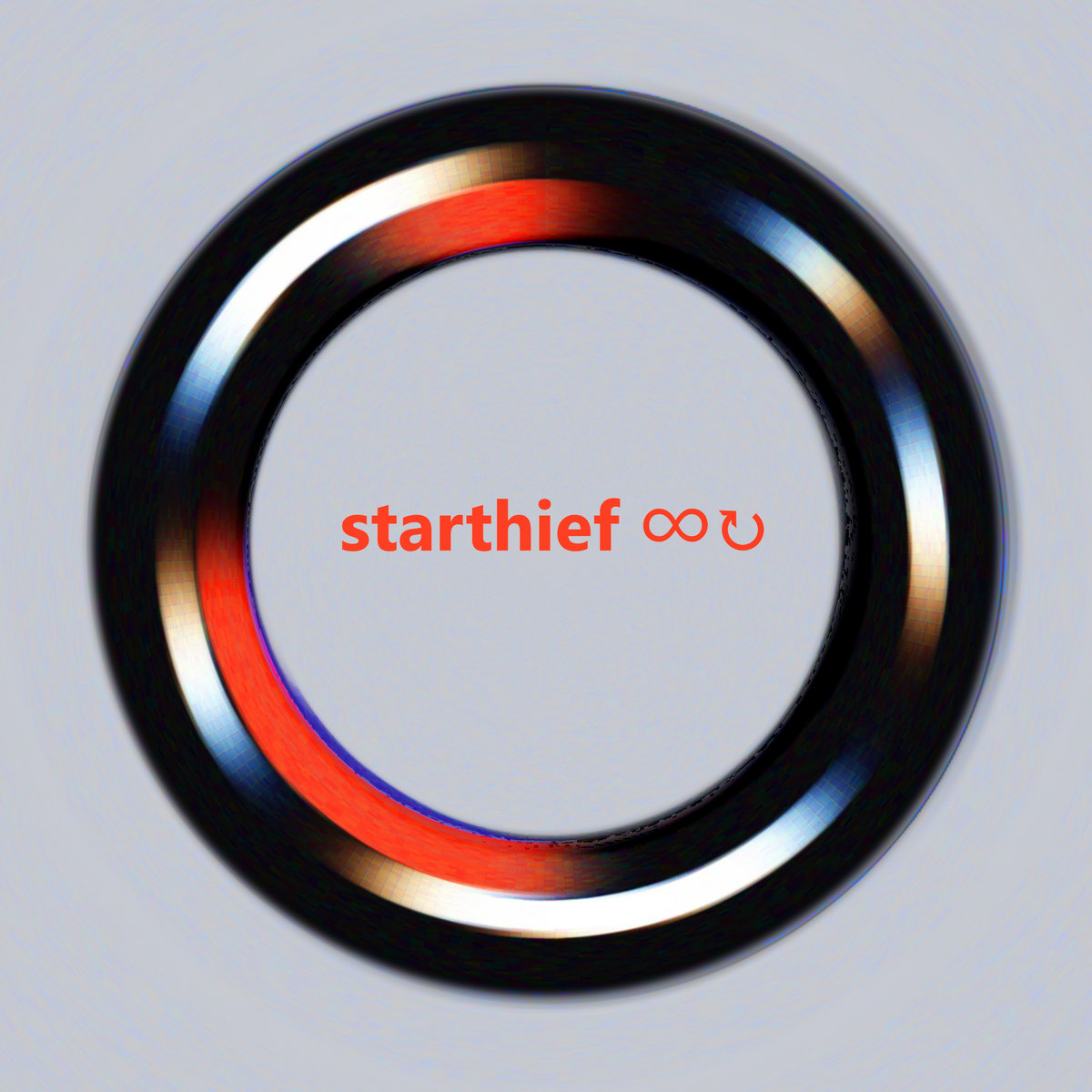
I’ve replaced the final genAI album art, this one for ∞↻ (aka Infinite Loop).
This one is actually fancier and more detailed than the original, abstract one. First, I painted in black on a transparent layer over the top of the original, and then did a circular blur to make it perfectly circular. I did the same with the orange and white.
Applying a polar-to-Cartesian transform turned my circle into a line, which I could then attack with the pixelization filter and Glitch Effect Maker — the chromatic aberration effect was especially useful — and then transform back into a circle and circular-blur it again. A bit more picky work with layers and blends got the edges and background the way I liked — including that unusual blue highlight on the orange section, a happy accident I chose to keep.
The central text was in my original version but at the time, I decided to just hide the layer. As you can see, I changed my mind.
I had plenty of extra time today, since my internet connection went out and I couldn’t work. (Spectrum claimed it was a power outage, but it wasn’t one that affected my house…) They kept pushing back the ETA for restoration, otherwise I probably would have driven in to the office to finish my workday. Instead I made some delicious-smelling chocolate/butterscotch bread, started a load of dishes, and recorded the final piece for Zeroes.
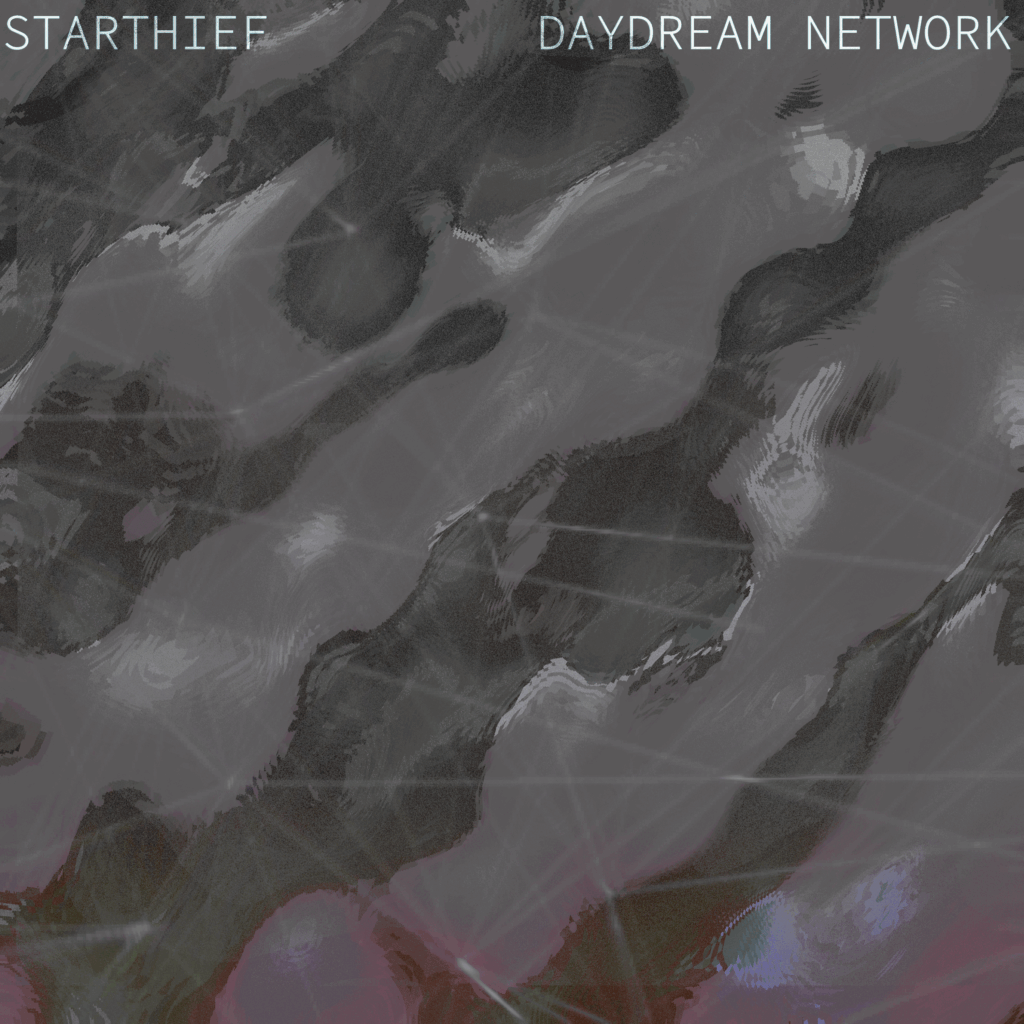
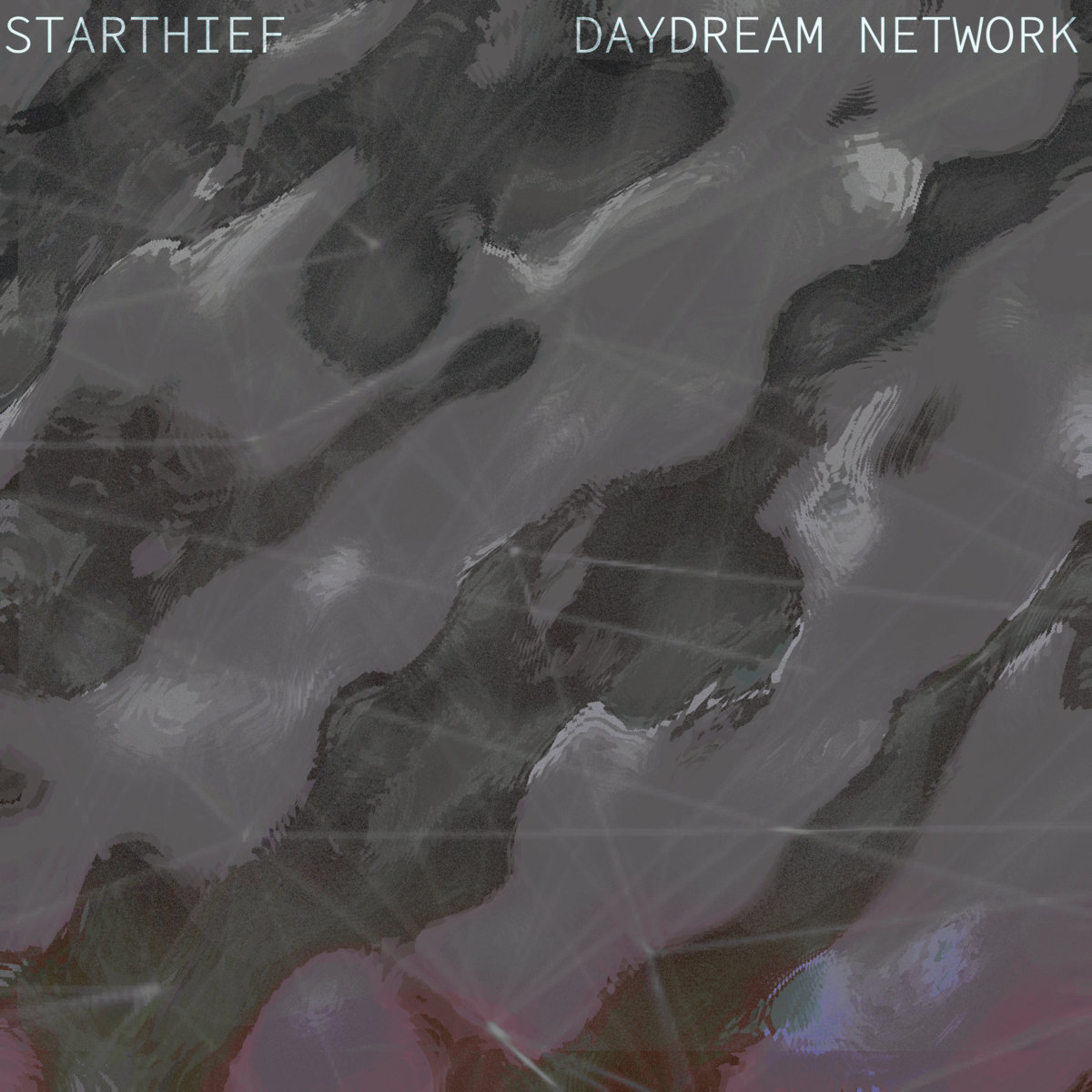
The genAI artwork for Daydream Network was pretty abstract. Monochrome smoke (or something) overlaid with some thin angled lines reminiscent of an phosphor vector display like you’d see on an old-school oscilloscope, except black instead of green or white.
I liked that art well enough, but decided to be thorough about ditching the genAI. So here’s my new version:
The grey/pink features were generated from random noise, blurred and processed and zoomed in and blurred and processed and… etc. until I had some really interesting texture. In full saturation it was crazy psychedelic and I almost went with that. Toned down, it was somewhat reminiscent of the deep maroon/pink and green blobs that I mostly see when I close my eyes, and I almost went with that. But splitting the image into separate RGB channels, the green was this lovely grey texture, and after some deliberation I decided that was mostly what I wanted. It better matches the original monochrome and grey/pink is reminiscent of the brain. I softly erased a little of that layer on the bottom so some of the color version could come through.
The lines atop it were generated in the software that I develop in my day job — I created a bicone, generated a mesh for it, viewed the wireframe, and zoomed the camera into its midst, finding a position I was happy with. Some edge processing and blurring got it where I liked it. I found I preferred it as a light overlay rather than a dark one this time.
I haven’t just been remaking the cover art. Zeroes is one track away from being finished (plus the mastering, art, and the notes). I want to do something a little different with the notes, and talk more about technique rather than specific gear.
I’ve been reading Long Live Evil, an isekai where a young woman dying of cancer is given the chance to take over the body of a condemned villainess in a super-cheesy fantasy story. She’s not utterly without ethics herself, it’s just that she believes that the characters in the book aren’t real and therefore leaning into evil to get what she wants (the means to heal her real body and return) is totally fine. It’s mostly goofy and hilarious, aside of course from the cancer, which reads like bitter personal experience.
I’ve also rerolled another Guild Wars 2 character. My Asura warrior, Justice Upon Them, is replaced by an Asura elementalist, Synergist Staxi. She’s going for the Celestial Quickness Catalyst build on Metabattle, which should be nicely tanky for dealing with Champions. It’s a somewhat slow burn (…and freeze, and zap, and crush) while still using core specializations and no access to the Jade Bot enhancements; the defense is inconsistent. But a wizard who charges in and swings a warhammer… never let it be said that GW2 sticks blindly to fantasy RPG stereotypes.
The end of the Kemetic calendar year comes approximately at the end of July, and the start of the next is a few days later (they used a 360-day calendar). The end of the year and the space between is said to be more chaotic and dangerous than usual as the world is kind of coming spiritually unwound. Those between-days are also holy days, and the temple has things planned for that time. I’m taking some time off work to be able to enjoy it (and also just relax).
As far as other summer plans go? People keep asking me this but I don’t really have anything. We want to do some kind of daytrip stuff with my parents, possibly in the fall instead of summer. My brother and his wife plan to plan a visit in September, and my in-laws also want to visit sometime in the fall. I’ll also take some me-time off around Thanksgiving as usual, whether or not we’re going anywhere.
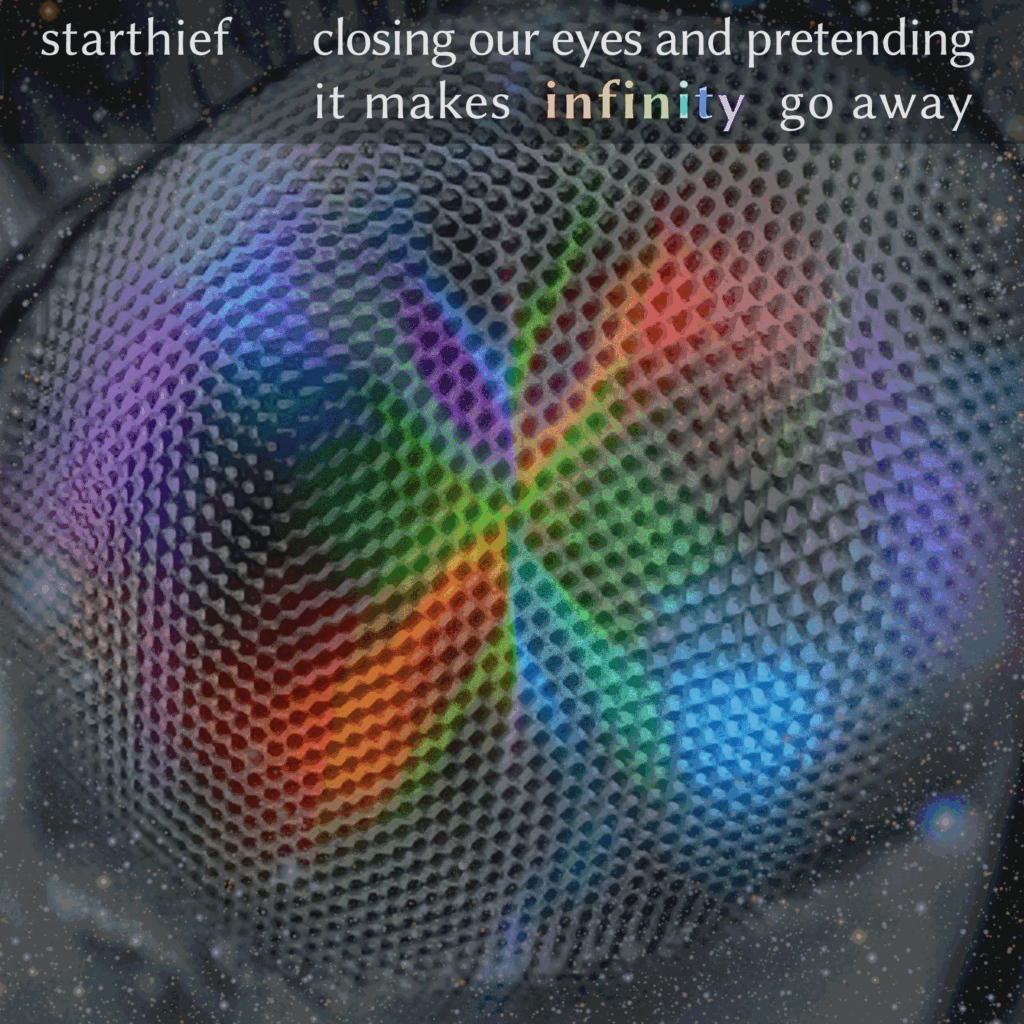
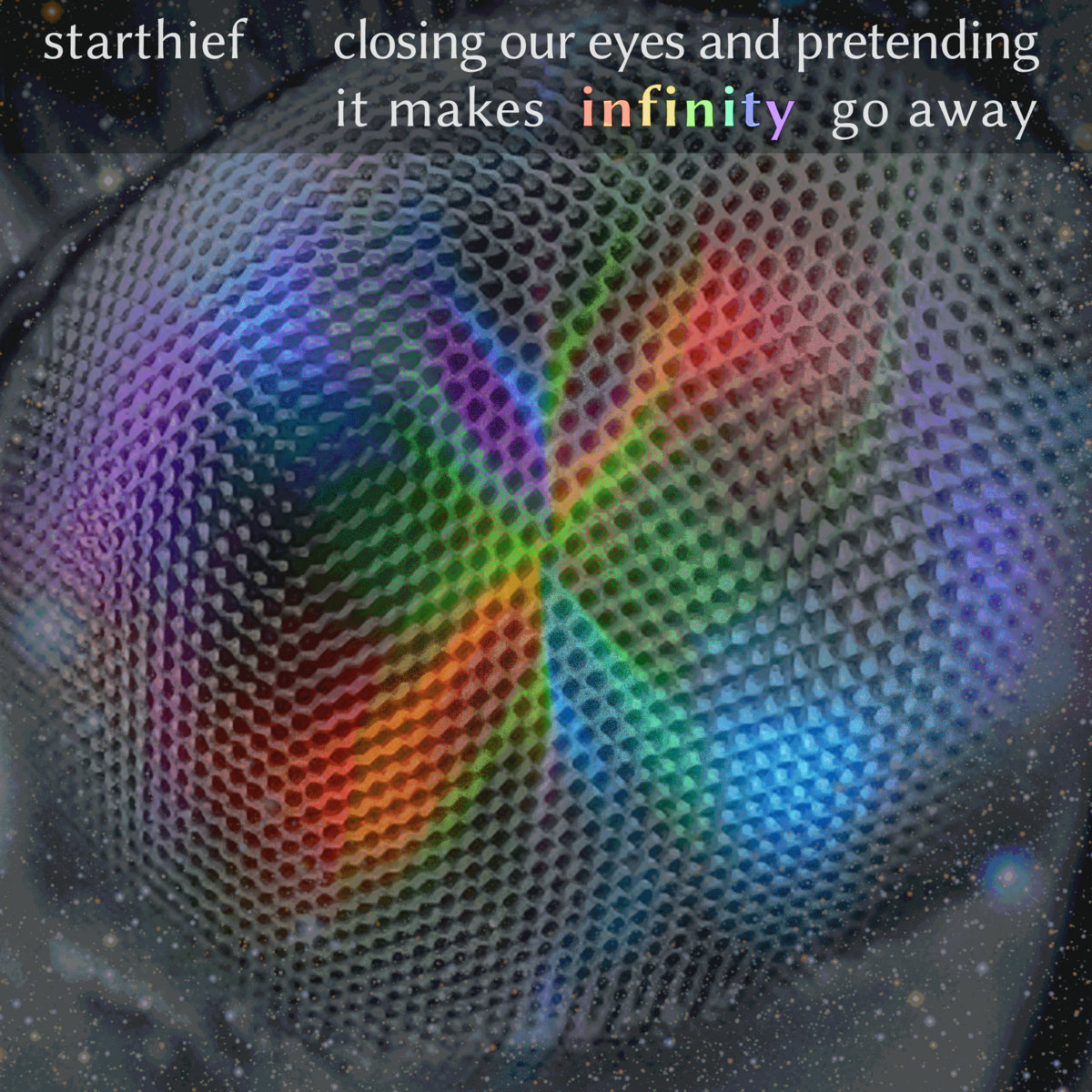
I got multiple nice comments about the cover art for Closing Our Eyes And Pretending It Makes Infinity Go Away. But those gorgeous but weird eyes and koi-like rainbow swirls were AI generated.
Here’s the new version:
Something possessed me to check Pexels for “compound eyes” rather than a human eye, and this first result, by “Sai Pixels”, was geodesically fascinating. (I did try a couple of human eyes later, but preferred this. It’s particularly ironic that insects can’t close their eyes…)
I painted bright colors over the original color swirl layer, blurred and glitched it and so on, and twisted it… and it started to hint at the curves of an infinity symbol, so I thanked my muse and took it in that direction. I kept the space photo layer (already masked out in the center) and text layers from the original.
For these updates, in MusicBee I just edited the existing album to point to the new artwork. But this didn’t work well when I copied it to my phone’s music library, since the original artwork was still embedded. No problem, I updated in that app (Musicolet) as well. …and then on the next sync those changes were overwritten and it was back to the old art. One wonders why there’s a cover.jpg if the images are also embedded directly in the mp3?
As it turned out, the simplest fix turned out to be downloading the albums with new art from Bandcamp again. ¯\_(ツ)_/¯
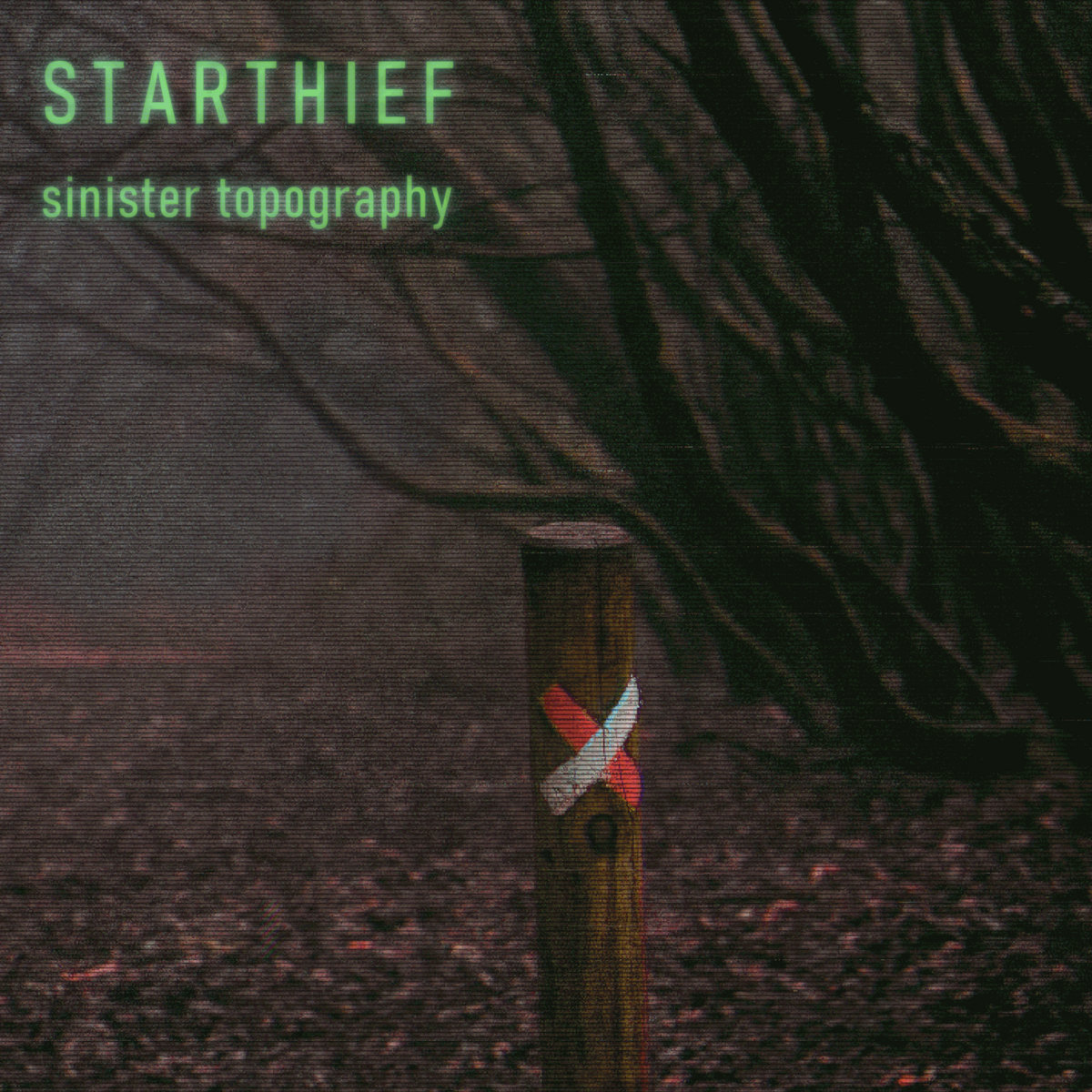
The old one was three layers of genAI, all very abstract… but one of those layers was in the style of a pencil sketch and I couldn’t help but think it was somebody’s style. Or an amalgamation of the styles of a few artists perhaps.
This one was from a royalty-free photo by Artem Zhukov on pexels.com. Color manipulation and that handy Glitch Effect Maker again.
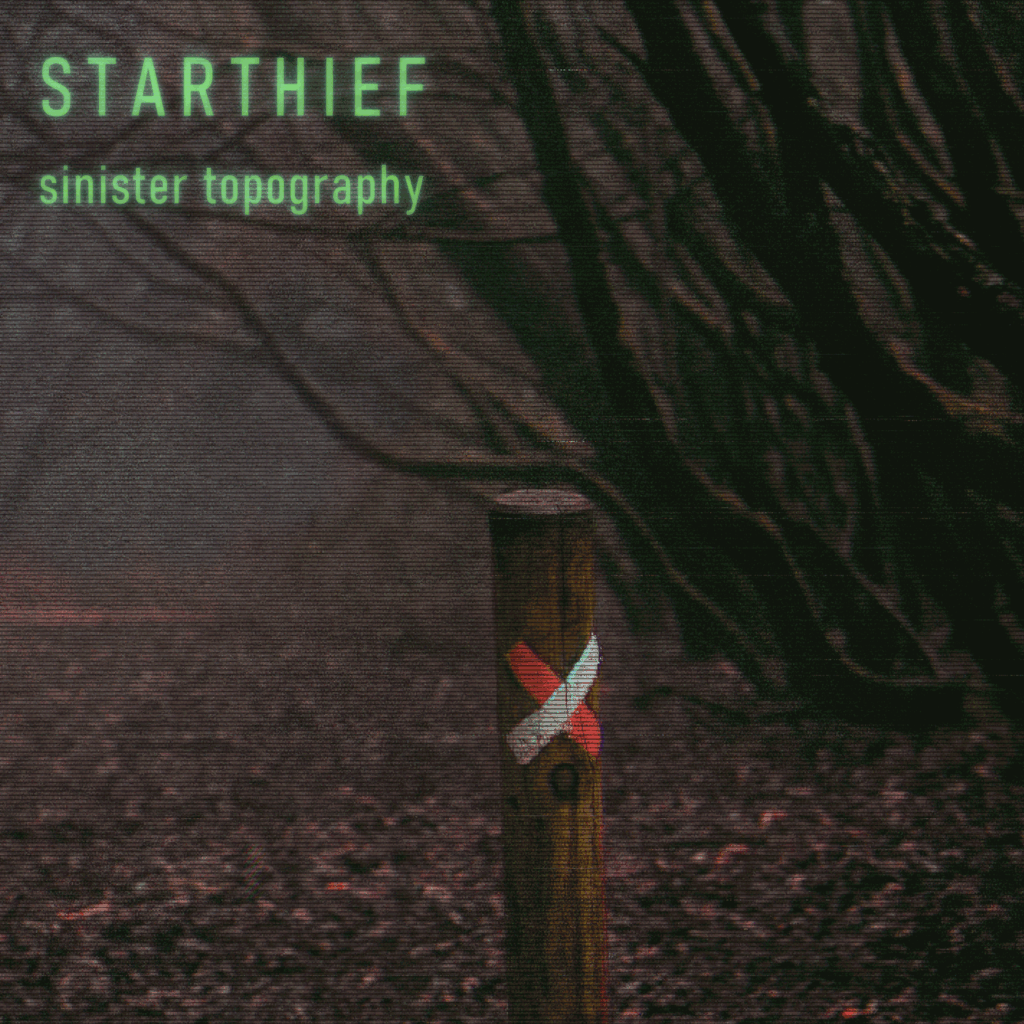
My first thought was to use a topographic map… but those aren’t very sinister. After some suggestions from my spouse, I felt like the mood (sinister) was more important than the literal words. She thought of a particular drive through a state park at dusk that was especially spooky. I looked at some options, and then thought of Gold Camp Road in Colorado. It’s said to be haunted, and has some creepy tunnels, some of which just seem to swallow light. At least one of those is blocked off with a hefty iron fence that itself would feel right at home in Mordor. I drove that road on a family trip before it was closed off, and it was scary even then. (Poorly maintained, winding gravel road winding through mountains in the middle of nowhere, dark narrow tunnels (originally made for freight trains, not a road) that curve and have signs about not chopping the wooden beams for firewood; locals in pickup trucks drifting around corners at rally racing speeds while we limped along in a basic van pulling a camper, the sun threatening to set before we got back to civilization…)
Ultimately I chose not to use the photos I found of those tunnels because they looked too unreal. But I thought a mysterious “X” on a post on a trail leading to denser woods would work. I had a couple of different compositions ready but I preferred the one that was zoomed in more and reddened. You Shall Not Pass.
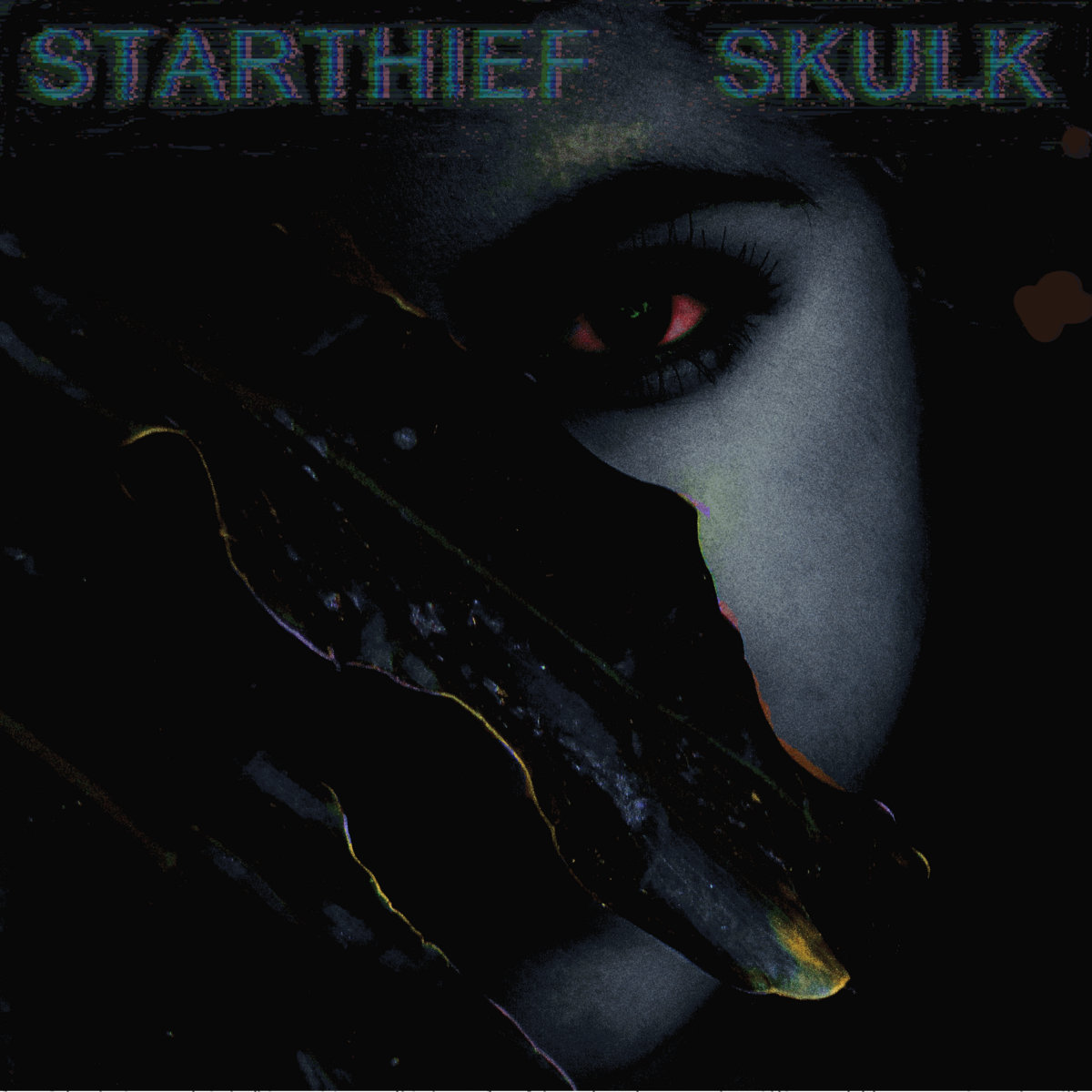
“I’ll be lurking for you!” was the catchphrase of host Dr. Paul Bearer at the end of every episode of “Creature Feature” on TV when I was growing up.
When I first thought about redoing the cover for Skulk, I thought about continuing with the “sinister creature lurking in a dark place” thing, but don’t have the skill to illustrate that myself. I could hire someone, but… really I wanted to do this stuff myself. So I had to change the plan.
I thought… a rat. A red-eyed, vicious-looking rodent in a sewer or dungeon or attic or something. But all the public-domain rat imagery I found was adorable. 😀 I started searching for other phrases and “lurk” turned up quite a few good options.
Humans who skulk around watching people are probably some of the scariest creatures there are. So after trying a couple of other things, I went with a photo by Luis Aquino on Pexels, with added grain and color drama. (I fully acknowledge that the red eye is silly, but a lot of horror does have an aspect of goofiness to it, as the good Doctor knew quite well.)
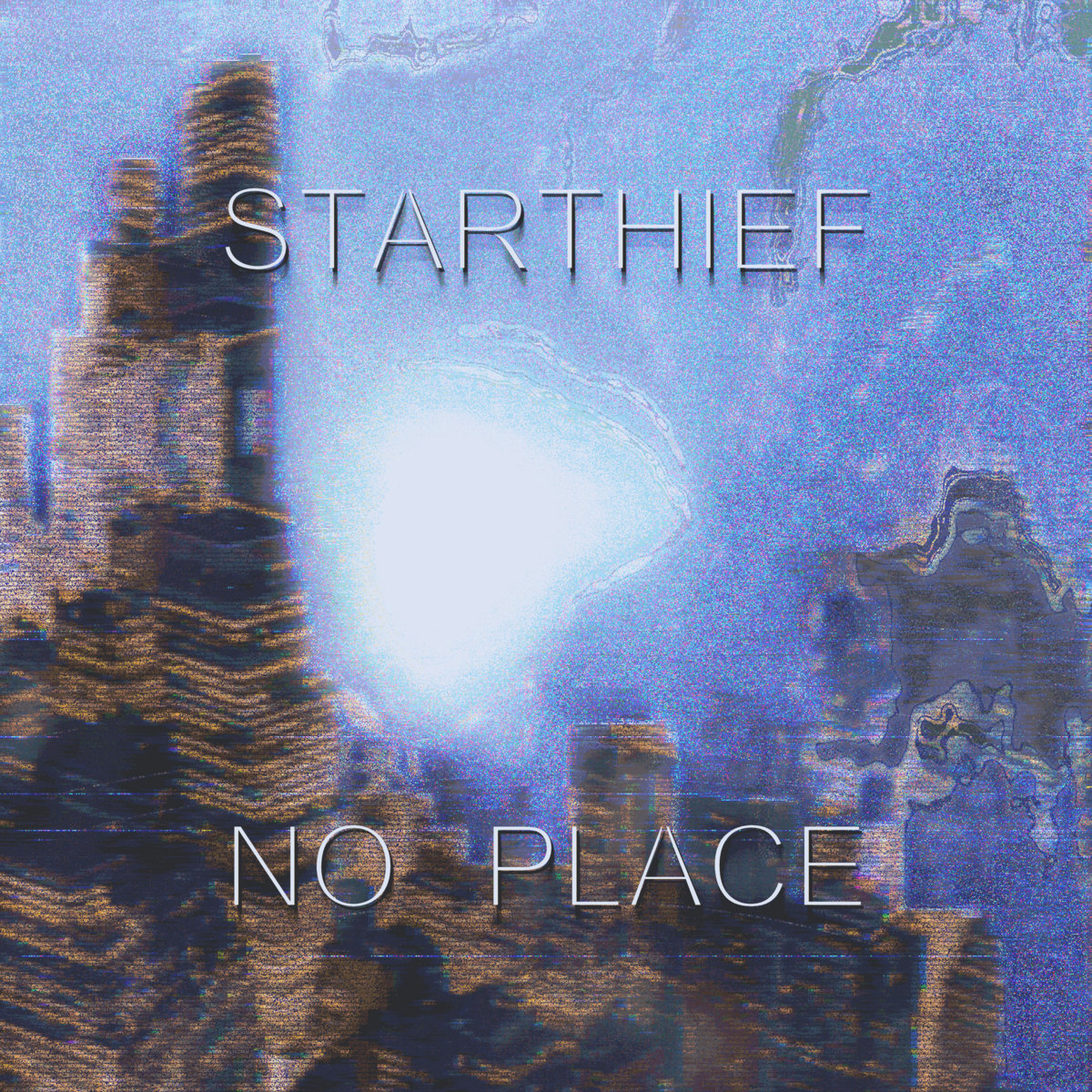
That album is all about imaginary, dreamed, otherworldly, impossible “places.” The old cover art gave the impression of weirdly scaled lit windows on misshapen skyscrapers, with a bright glaring fog in the background obscuring the hinted outlines of other shapes.
I simply drew a few black rectangles over the top of the foreground buildings, and ran some “find edges” filters on the remaining space in all its vagueness, and did some flood fills in white to partially cover odd empty spaces. I found an aerial photo of Manhattan, pixelated it and grunged it up so it was almost an anime cyberpunk look, and masked that in. There was a bunch of other manipulation, color and tone adjustments etc. but that’s the gist of it. Again, the old text layers just got put right back as they were.
I like that it sort of gives the illusion of sandstone rock formations in a canyon (or at least a blocky procedural version from the game “Superflight”), and the illusion of nebulae in space, while being neither of those things. And I like that the buildings and sky don’t quite look like they should be in the same scene… like it’s not an ordinary sky but an intrusion from a different world.
I’ve fallen in love with Glitch Effect Maker. It’s not totally comprehensive, and it’s not actual databending which reveals something of the nature of file formats and compression. But it can displace color channels, add noise and scan lines and that sort of thing in fun ways. Of course, the rows of lit and unlit windows in the image (enhanced by pixelating it) themselves give an impression of scan lines.
My visual methods in some ways reflect the processing I do to audio. It’s not unusual for me to distort, bitcrush etc. a sound and then filter or smooth it back out, or vice versa, all in the interests of texture.
I’ve released dozens of albums since 2018, and made all my own album covers except for one.
In some of those cases, I used generative AI tools. My attitude was different back then, and I’ll neither justify nor apologize for that now. But I’ve since felt that some of those covers are an embarrassment — I just didn’t know whether I wanted to go back and redo them, or merely acknowledge that I’ve moved on.
Second, I’ve lately been looking at some anti-AI art, and a common sentiment is that “bad”, amateurish human art is still better than genAI. And I get it. It’s a question of heart and soul and imagination.
Third, I’ve been exploring the possibility of using some other distribution service than Bandcamp in the future. Some of the options have a total ban on genAI, for the cover art as well as the music. I’d need to update the art for some of those older albums if I were to include those.
So with that in mind, I’m redoing those album covers. At first I was just going to update the ones that look like AI art, which are especially embarrassing. But especially on the second and fourth points, I’m likely to do all of the ones that have a truly generative component.
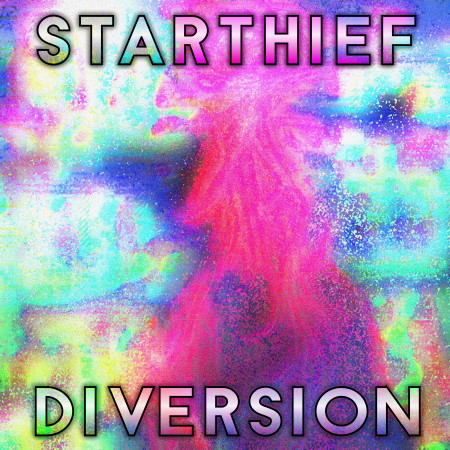
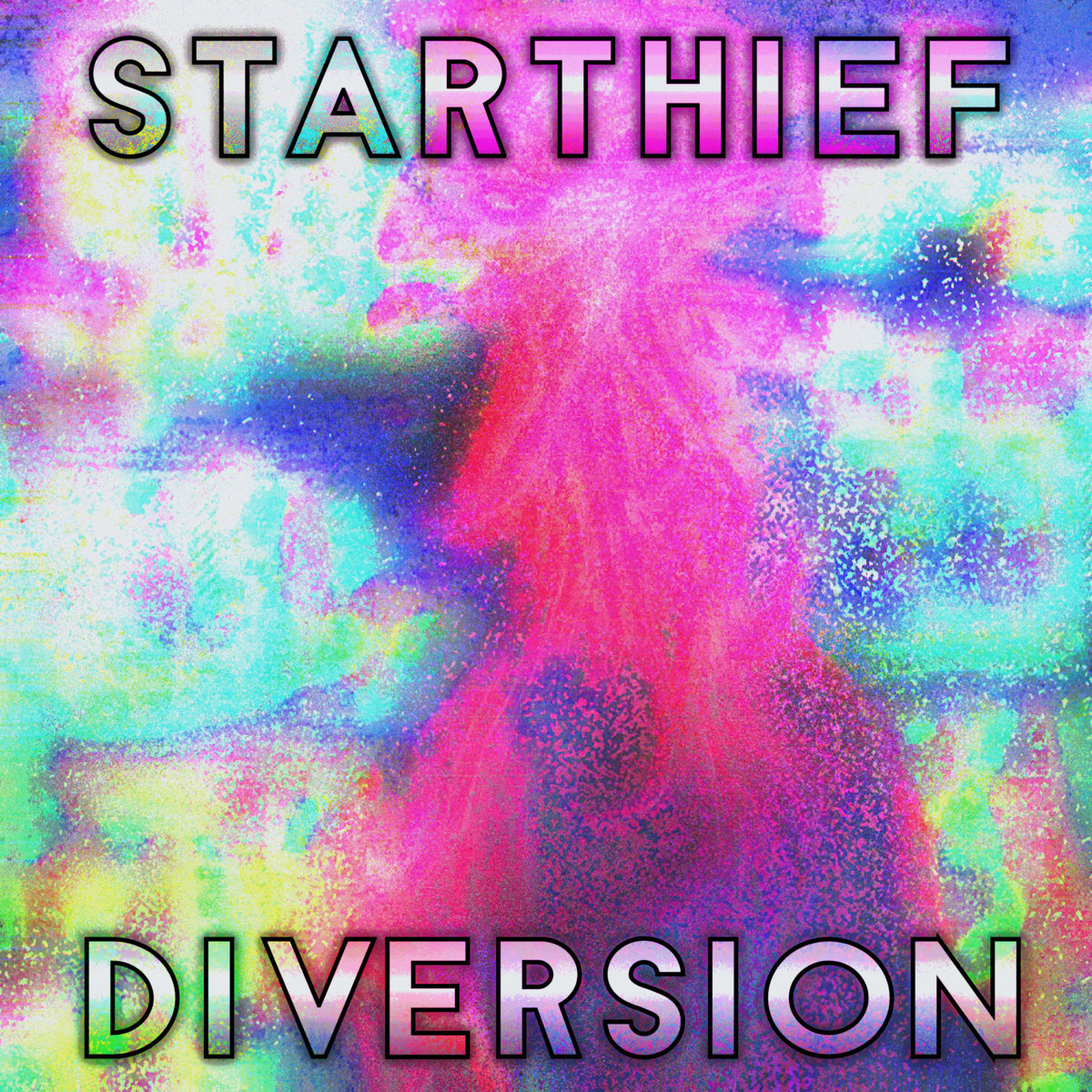
Diversion is the first to be replaced, and here’s the new one:
The original one looked like AI, like a style that I don’t think any human would actually paint. (Part of why I originally thought it was okay.) It was a wonky suggestion of a wall of modular synth gear, and in the center either a dark rift sprouting tentacles/cables — or a figure in a long dark cloak and totally fabulous pink hair facing the synth, or perhaps both at the same time. I have always liked the ambiguity. But I’ve long since decided I disliked the style/appearance of the details, and the fact that this is something that a human artist should have made.
So I painted over it. Very crudely, as befits both my lack of that skill and the impression and process I wanted to go far. I thought about “computer art”, specifically a couple of electronic paintings from an 80s magazine of a dancer in very bright, saturated rainbow hues, and about glitch aesthetics. I also thought about a kid with crayons. I painted the central shock of pink, fading to other shades of pink/purple and then a deep blue over the darkest areas. The “synth” got swoops of greens and blues. Very few colors, very little detail. I covered up all the bits that “looked like AI” to me, leaving only vague shapes. I blurred the crap out of it, applied several different procedural (non-AI) processes and filters, did some layering and just kept playing with it — improvising — until I was satisfied. This all was very rapid and I was not at all perfectionist about any of it. Over the top went the text layers I put on the original album art. Done.
This isn’t fine art and I don’t consider myself a visual artist. It’s not trying to say anything with the results, though I suppose I am with the process. The main purpose of the “product” is to give the album a visual identity — but I do think it’s pretty diverting to look at. 🙂
Those who have the album should be able to either redownload the whole album to update the art, or find it at https://f4.bcbits.com/img/a1488757655_10.jpg to manually replace it. Or keep the old version if you don’t care.
I’m not necessarily going to use the same kind of process/thinking on the other replacement covers, but we’ll see. The ones where I used AI tools:
11 Spells: screenshot of a 3D mesh in the software I work on, but then run through an AI-based style filter and then further processed. It’s much more “AI assisted” than AI generated. Also, this album is old enough I don’t really recommend it, so I think I’m just going to let this one be.
No Place: done with Deep Dream or one of the other psychedelic, “everything is made of giraffes and dog’s eyes” early LLMs with a very limited training set. There was a surprising amount of manual work put into it, but I still want to redo it.
Skulk: The figure was generated with one AI tool, then processed several times over by a “restyle” sort of tool, and layered to create the smokey layers. I thought the effect of that was pretty cool. Then I processed a photograph with both AI and non-AI stuff. The problem with the result is, those layers just don’t fit each other very well. I haven’t decided what to do here — maybe I’ll hire someone to paint a cover instead.
Sinister Topography: this was three or four layers of generated imagery, layered together with some manual color painting. I kind of like the look, but I don’t like the idea that the “pencil drawing” stuff should have been done by a human artist. I’ll probably replace the AI with a real topographical map and then see where it goes.
Daydream Network: this was also AI-generated, but I am not unhappy with it. I may replace it just out of principle but it’s the lowest priority.
Infinite Loop: this was AI-generated, and then hand-edited. I like its abstractness, but I feel called to execute something similar by hand-painting it.
Closing Our Eyes…: there are at least three layers of genAI here. I like the unereality of the iris-in-iris-in-iris and the sort of betta fish fins swirling around it. But it’s AI slop and I want to replace it.
This is now three years in a row where, around the first weekend in July when the weather is plenty hot, we have a power failure that takes some time to resolve. Two strong waves of storms rolled through our area in the afternoon on July 4, the second one finally bringing relief from the heat wave we’ve been having but also knocking down a tree limb that took out our power. There were scattered outages all over, but this year it “only” took 17 hours to get service back, instead of multiple days. And the more reasonable temperatures made it fairly bearable.
Fireworks are theoretically illegal in our suburb, with dozens of signs along the streets threatening $1000 fines. I don’t think that gave anyone pause. And of course, we are surrounded by dozens of other suburbs, some of which have their own official fireworks as well as tens of thousands of amateurs eager to blow stuff up. The noise was sporadic through the afternoon (between storms), and absolutely continuous from about 7 PM to the wee hours. At times we could pretend it was just distant rolling thunder, but at other times it was obviously nearby Roman candles or big booming explodey fireworks. Between the noise, lack of air circulation, slightly too warm bedroom, and the cat that also having a bad night, we barely slept. And after that, somehow there were still enough fireworks left for it to happen again last night, though it finally tapered off at about 10 PM.
I know the current administration in general, and Chump’s hijacking and bungling of the 250th anniversary celebrations in particular, have made me even less inclined than usual toward patriotic feelings this year. But… ugh. Fireworks are very different when you’re watching or participating, vs. when you’re just trying to get some rest.
I recently finished Graham Robb’s The Discovery of Britain: An Accidental History. This book took me a while to get through — I would typically read one chapter and then find I had to stop. It’s because he pulls no punches about the horribleness of various politicians and policies — the racism, sexism, classism, greed, cronyism, corruption, lack of any sense of duty, callous disregard for other peoples’ lives and happiness. The lies and myths we are told about history. And most telling: examples of the terrible backward things said and done by some politician, only to reveal this wasn’t some medieval baron or Victorian official but a democratically elected MP five years ago. Mr. Robb, I’m afraid you aren’t doing anything to dispel the stereotype of Scots being bleak and grim.
He did also tie in the history with his own personal life — whether his travels, or childhood or family stories. It gives one the sense of being surrounded by history, swimming in it. As an American, I feel like most of us don’t have this feeling about where we live. We can’t point to a home we pass by on the way to work every day and say that so-and-so slept here 900 years ago on the run from persecution, or this “Roman” road actually dates to the Bronze Age. Not far from where I live, there was the thriving major city of Cahokia, before Columbus or Cortez or the Mayflower… but it’s so easy to forget, I know very little about it, and still haven’t visited. There’s the old capital in St. Charles with a few 18th century buildings. But everyday life just doesn’t feel immersed in history that goes back more than a couple of generations.
When I finished with that book, I moved on to Autumnal Conductor. From the descriptions I’d seen I thought I’d enjoy it, but unfortunately it comes across as needing a lot more work. In the first few pages, there were a few words that are simply used incorrectly, quite a bit of thesaurus abuse, and a few phrases that just didn’t make sense even during an action scene when things should be very clear. The use of language didn’t embellish the story, it obscured it.
My current read is Free Play: Improvisation in Life and Art by Stephen Nachmanovitch. It’s preaching to the choir, but some of his thoughts about improvisation and the way he expresses them are inspiring and might lead to thinking a bit differently overall. It certainly applies to modular synthesis:
There is a German word, funktionslust, which means the pleasure of doing, of producing an effect, as distinct from the pleasure of attaining the effect or having something.
I’ve noticed before that sometimes there can be a clear, simple, almost childlike joy in turning a knob and hearing a new sound. It’s something about the feeling of control, of “producing an effect” as this says. I can’t explain why something so simple feels so good; there’s no particular mastery of a difficult or especially deft physical movement as there is in, say, violin or dance or a sport. But it’s very visceral. Of course it’s not just synths that are like this; some other experiences are also like this. I do think it explains part of the gap in feeling/inspiration between software and hardware synthesis though.
Nachmanovitch quite appropriately keeps referring to play, to the freedom of just doing things unscripted and spontaneously for the fun of it. He draws a distinction between play and performance, between play and games. It’s not about proving anything, or even saying anything even though it is expressive.
My therapist has discharged me, because I’m keeping anxiety at bay and don’t need therapy anymore. As I’ve said, I didn’t have any major trauma to work through, no big issues that I feel like I need to hash out. While I feel like the majority of the improvement came because of the meds, she did give me some helpful guidance and direction, and was generally a kind, engaged listener while I was still having some difficulty. She says I’m welcome to make an appointment with her again in the future if I feel like I need to.
I never really did talk about gender identity stuff much with her. It was sort of peripheral to other things. It’s not the source or a trigger of my anxiety, and it’s not something I feel like I need help figuring out at this point. Yes, things like Rubio delaying and vandalizing my passport card, and being indirectly accused of “nihilistic violent extremism” (along with Teen Vogue, the Girl Scouts, several churches and teachers’ associations and medical associations) got to me. But shit like that would bother me anyway simply because I am a decent human being.
Also behind me: my yearly performance review. It went very well as always, but in previous years it’s always been something I found myself worrying about. This year, I didn’t notice any particular stress leading up to it, but it still felt good to get it done. I was amused and gratified to find out that my supervisor was in the mood to spill a little tea, and he doesn’t really like the format we’re using either. It’s probably better suited to a larger company with more turnover. But we make it work. Now I’m just hoping for a nice raise.
Bandcamp might be in trouble. I haven’t seen this reported anywhere else yet, but the source does seem trustworthy. Laying off a majority of the engineers — after the 50% layoffs Songtradr already did when they completed their acquisition in 2023 — does not bode well at all.
That said, the “RIP Bandcamp” thread at KVR is now 4 years and two acquisitions old, so maybe it’ll make it through this too. Maybe they’re preparing to sell it off to someone else, and maybe that someone else will be better (I won’t hold my breath) but I’m not going to assume it’s all going to go away and start the hunt for an alternative. Still, if you have bought music there, it might be a good idea to make sure to download it just in case.